
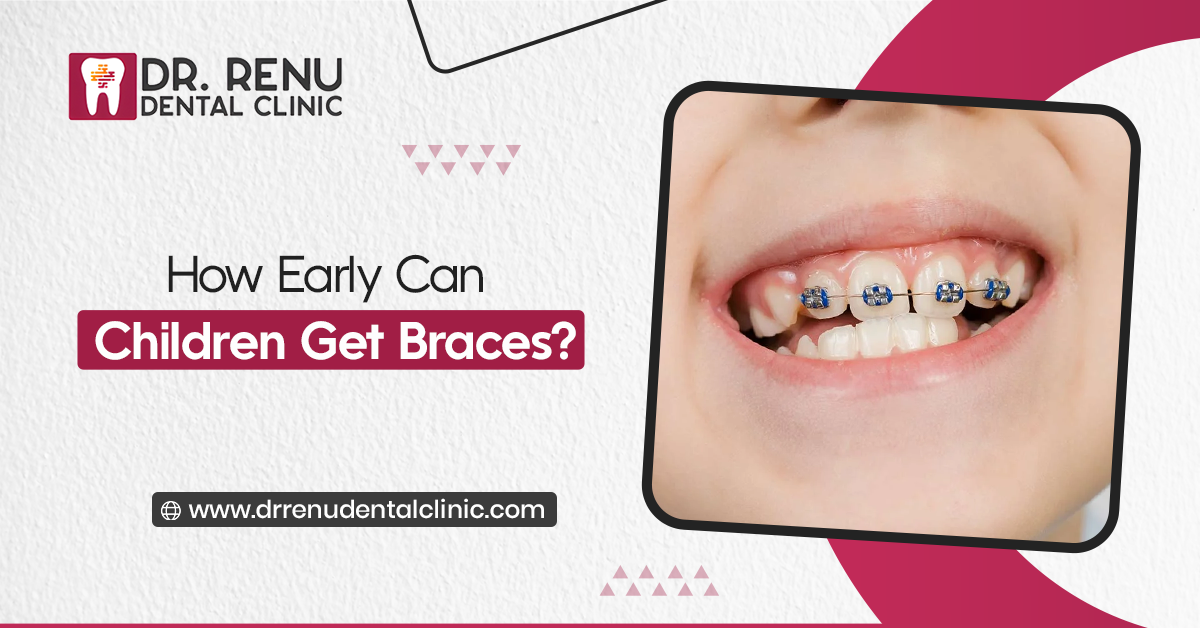
How Early Can Children Get Braces?
Introduction
When parents observe the child has crooked teeth, jaw misaligned or speech difficulties, many of them pose a question: How Early Can Children Get Braces? The orthodontic issues tend to start way before the teenage years and may progress without any symptoms as the jaws and teeth mature. These problems can be controlled at an early stage, with an assessment that would allow controlling and preventing their complicated character.
Knowing the right time to start orthodontic treatment enables the parents to keep their child healthy in terms of their teeth without subjecting them to needless and late procedures.
Right Age for First Orthodontic Checkup
According to the majority of dental professionals, a child orthodontic checkup should be done when an individual is 7 years old. During this age, there is a combination of both baby teeth and permanent teeth and the jaw issues such as early growth, crowding, and bite might be easily identified.
This visit at such an early age does not necessarily imply that braces are needed. Rather, it assists in deciding on whether the child needs to be monitored, receive preventive care, or early intervention depending on his or her growth pattern and kids’ braces age.
Can Kids Get Braces Early?
Yes, even young children can get orthodontic treatment at an earlier age. In case some dental or skeletal problems are identified, early orthodontic treatment can be considered to shape the jaw and fix the teeth.
This initial stage is usually referred to as phase 1 orthodontic treatment and it can either include the use of braces or other appliances to correct jaw width, lower severe crowding, or solve bite issues. In other instances, the later orthodontic treatment is made easier and more efficient with this approach.
Signs Your Child Needs Braces
There are so many signs that indicate Parents should consider orthodontic evaluation:
- Crowded, overlapping, or crooked teeth
- Difficulty biting or chewing food
- Early or delayed loss of baby teeth
- Mouth breathing or thumb-sucking habits beyond early childhood
- Protruding front teeth prone to injury
- Jaw shifting, clicking, or facial imbalance
These signs majorly indicate the underlying alignment or bite concerns that braces for children are needed and can help correct if there are any issues persisting.
Benefits of Early Treatment
Premature orthodontic treatment has long-term functional and preventive benefits if it is prescribed properly:
Supports Proper Jaw Growth
Early intervention can assist in the formation of the jaw when the bones are still developing, which decreases the chances of having serious bite issues in the future.
Clears Space of Permanent teeth
Early treatment of the crowding problem will enable the permanent teeth to develop to the right positions, eliminating future extractions.
Enhances Bite and Chewing Function
Early correction of the bite helps increase the chewing efficiency and facilitates the formation of clearer speech.
Lessens the Dental injury risk
Bulging teeth are more exposed to trauma. Early correction is done to guard them against fractures or damage.
Makes Future Orthodontics easier
In most of the cases, children who receive early treatment with pediatric braces achieve shorter, simpler orthodontic treatment during their teenage years.
What Happens If Treatment Is Delayed
Delaying the orthodontic treatment if the early signs are already in can cause long-term dental, functional and even emotional problems for a child. As the jaw and the teeth continue to grow, the untreated problems often become more complex and difficult to correct.
Severe Crowding Becomes Permanent
When there is not enough room in the jaw, permanent teeth erupt in an irregular manner. Over time, this crowding becomes more acute, and it is not possible to align with the help of simple measures without extractions or protracted treatment.
Jaw Growth Problems Remain Uncorrected
Early jaw imbalances such as narrow upper jaws or underdeveloped lower jaws can be as bad as underdeveloped jaws if they are not treated during the growing years. Once growth is complete correction may need to be done with surgery rather than with braces alone.
Increased Risk for Tooth Damage and Wear
Often teeth are misaligned in a way that they will rub together unevenly causing enamel wear, cracks, or fractures. Protruding teeth are also more likely to get hurt on falls or in sports activities.
Bite Problems Affect Chewing and Speech
An improper bite can produce inefficient chewing in the mouth resulting in digestive discomfort. In some children, the bite problems could also be the cause of speech problems or unclear pronunciation.
Longer and More Expensive Treatment Later
Orthodontic correction is more time-consuming the longer treatment is put off. What could have been taken care of with an early intervention may need full braces several years later.
Increased Risk of Tooth Extraction or Surgical Intervention
Severe crowding or discrepancies in the jaws often cause orthodontists to recommend tooth extractions or in extreme cases to corrective jaw surgery during adulthood.
Affect on Facial Appearance and Confidence
Dental misalignment can affect facial balance and smile aesthetics. As children get older, aesthetics problems in teeth can influence self-esteem, confidence and social interaction.
Best Age for Full Braces
Dentists tend to recommend Full braces between the ages of 11 and 14 years old, when most permanent teeth have erupted, yet the jaw still continues to grow. This stage enables orthodontists to bring about optimal alignment in a short period of time.
However, all children’s dental development is different. Some children will benefit from early intervention and full braces later on, while others may need only treatment in adolescence.
Reach the Best Pediatric Dentist in Jaipur for Your Kids!
Selecting a specialist correctly makes the diagnosis and child-friendly care correct. The advice given to the parents by an expert Pediatric Dentist in Jaipur will help them to have a clear picture of what is right in the initial stages of orthodontics and future planning.
Dr Renu Chaudhary is regarded as an expert in the field of dental development of children and early orthodontic examination. Dr Renu Dental Clinic offers personalised services to children in a friendly and relaxing atmosphere.
FAQ
What is the earliest age at which children can have braces?
Children can require orthodontic work as early as the age of 7, depending on the development of their jaws and teeth.
Is it necessary to do early orthodontic treatment for all children?
No. Early assessment assists in deciding whether one requires treatment or monitoring.
What is stage 1 orthodontic treatment?
It is based on the management of early jaw development and correction of early anomalies.
Should young children have braces?
Early orthodontic treatment is deemed to be safe and effective when prescribed by a specialist.
How do I know if my child needs braces?
The most accurate method of examining orthodontic requirements is through professional examination.